🚨 Join Alex and Geof live at 2:30p.m. ET🚨
We are analyzing the market’s TACO (Trump Always Chickens Out) stance on Iran, deciding if the Disney rebound is a trap or a buy, and why glass is king for NVDA and Corning [tap to join us for Profit Panel]
Let me be honest with you — I don’t think most traders actually have a process for stops. They pick a level, hope it holds, and then react when it breaks.
That’s not how I want to be in the market.
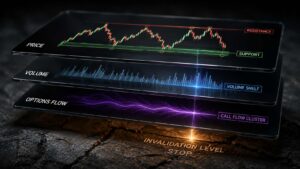
So before I even think about entering a trade, I run through a simple 3-layer check. Nothing fancy. Just price, volume, and options flow — and I only act when they start pointing in the same direction.
I’ve used this exact approach in names like Wolfspeed (WOLF) and Cipher Mining (CIFR), and the idea holds up across different setups.
How I Actually Look at It
I always start with price. Where did buyers step in before? Where did sellers take control? I’m just mapping out the obvious structure — support, resistance, failed breakouts, that kind of thing.
Then I layer in volume. Not in a complicated way — just asking, “Did the market actually care here, or did it just pass through?” A volume shelf tells me price memory exists. A valley tells me it can move fast.
Then I look at options flow. But here’s the key — flow doesn’t lead for me. It just tells me where attention is building. I still need price and volume to confirm it makes sense.
When all three line up, that’s when I start paying attention.
Where the Stop Comes From
This part is actually the easiest.
If I take a trade, my stop is just the point where the whole idea stops working.
Not a random percentage. Not something I “feel comfortable with.”
It’s usually the level where price breaks through the volume shelf and invalidates the structure that supported the trade in the first place.
If that breaks, I’m out. No debate.
A Simple Example
Applied Digital (APLD) is a good example of how this comes together.
You had resistance around $40, support near $38, and right in that same zone you had a clear volume shelf sitting at $38.
Then options flow showed up — heavy in-the-money calls right around that same level.
So suddenly you’ve got price, volume, and positioning all leaning on the same line.
At that point, the trade isn’t complicated anymore. If $38 breaks, the idea is wrong. That’s your stop. Clean and simple.
The Bigger Point
Not every setup deserves action. That’s probably the part most people skip.
Some trades look good in isolation, but if the layers don’t line up, I’d rather just pass.
And honestly, a lot of damage in trading comes from forcing things when nothing is actually there.
One More Thing on Flow… People love chasing big option sweeps. I get it — it’s exciting.
But excitement isn’t an edge.
Flow only matters when it lines up with structure. Otherwise, it’s just noise that pulls you into bad decisions.
At the end of the day, this isn’t about finding perfect trades.
It’s about knowing exactly where you’re wrong before you even get in.
If you can do that consistently, everything else gets a lot easier.
To better trading,
Alex Reid
WealthPin
Follow along and join the conversation for real-time analysis, trade ideas, market insights and more!
- Telegram: https://t.me/+MKMN30kDmVkwMDdh
- YouTube: http://www.youtube.com/@heywealthpin
Important Note: No one from the WealthPin team will ever contact you directly on Telegram.
*This is for informational and educational purposes only. There is inherent risk in trading, so trade at your own risk.
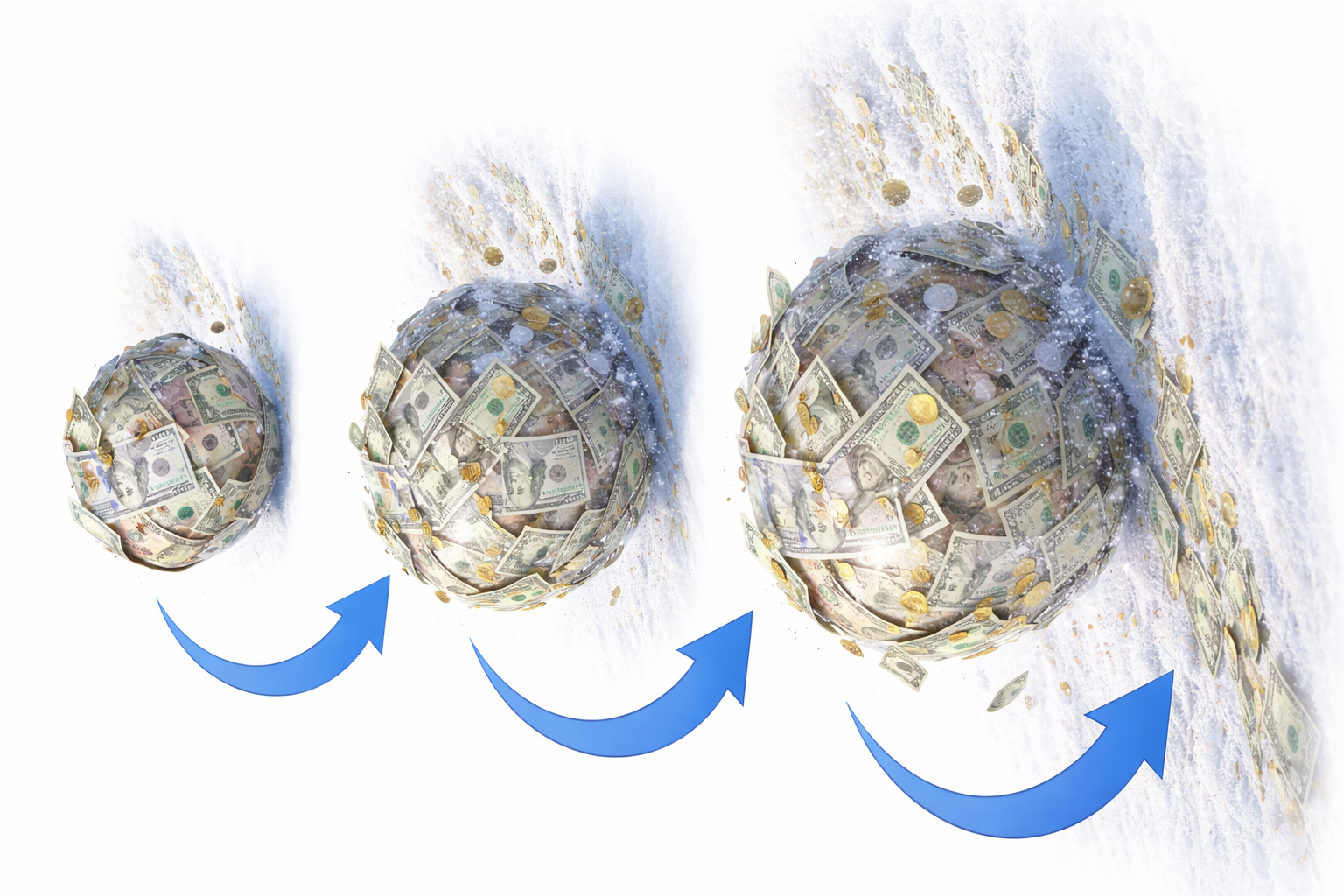
P.S. The Income Snowball World Premiere Was Amazing!
Silas Peters recently went live with Nate Tucci to share how to build an “Income Snowball” in the stock market with a $500 account!
Wanna join the very next opportunity?
Disclaimer: We develop tools and strategies to the best of our ability but no one can guarantee the future. There is always a risk of loss when trading. Past performance is not indicative of future results. The trades you’ll see today are hypothetical, based on historical examples with the benefit of 20/20 hindsight, to demonstrate the new system’s potential. The result was a 64% win rate, a 12.5% average return (winners and losers), an average hold time of 3 days, and a profit factor of 2.74.