
🚨 I’ll be live at with Geof at 2:30 p.m. ET🚨
We’ll cover post-bell earnings trades, where Geof is deploying cash in metals, how to position for rate cuts now that Warsh is the confirmed Fed chair and more [tap to join us for Profit Panel]
I’m holding an active wheat position that’s up around 30%, and I wanted to walk you through the research that keeps me in it.
This isn’t a headline play or a technical bounce. It’s driven by fundamental supply data that deserves attention — especially as weather and planting conditions add pressure across key producing states.
The Numbers Behind the Trade
Here’s what stands out: The U.S. is set to harvest the smallest wheat crop in 54 years.
Winter wheat has been hit hard, condition ratings have plunged, and both yield and planted area are running low.
That combination gives us a structural supply problem that traders can price directly, since these contracts settle based on U.S. wheat rather than global output.
It’s also worth remembering that the U.S. accounts for only about 8% of global wheat production. So while the world may not feel the impact of our crop issues, the U.S. market certainly does — and that’s what these contracts reflect.
The regional picture is even more concerning…
In Colorado, Oklahoma, Texas, Kansas, and Nebraska — the core winter wheat belt — good-quality wheat has dwindled to roughly 14%, with the majority rated poor or very poor.
When the heart of domestic production falters, it reinforces a supply story that traders can’t ignore.
Why I’m Not Taking Profits Yet
Someone asked whether we should exit wheat, and with the position up about 30% and expiration set for June 18, I’m inclined to stay patient.
These contracts don’t suffer from theta decay, so time is working with us rather than against us.
With that much room before expiration, there’s no rush — you have time to let the thesis develop, and I plan to hold a bit longer.
The fundamental backdrop hasn’t weakened. If anything, the combination of diminished crop quality and shrinking regional output supports staying in the trade.
Wheat behaves differently from crops like soybeans or corn, which react more directly to shifts in U.S. supply. Wheat is a global market, but domestic contracts still respond heavily to our own production challenges.
That’s why I’m letting this play out. The setup still looks constructive, and if momentum keeps building, I wouldn’t be surprised to see a push toward $7 wheat in the near term.
👉 Click here to join Profit Panel at 2:30 p.m. ET on weekdays!
Profit Panel equips traders to adapt to any market condition, by knowing when to trade aggressively and when to stand aside, live at 2:30 p.m. ET Monday-Friday.
To better trading,
Alex Reid
WealthPin
Follow along and join the conversation for real-time analysis, trade ideas, market insights and more!
- Telegram: https://t.me/+MKMN30kDmVkwMDdh
- YouTube: http://www.youtube.com/@heywealthpin
Important Note: No one from the WealthPin team will ever contact you directly on Telegram.
*This is for informational and educational purposes only. There is inherent risk in trading, so trade at your own risk.
P.S. The AlphaFlow Dashboard Has Compiled the Top Options Setups for May
The last time we had setups like these fall right in our lap, we were able to make away with more than 10 winning double, even triple-digit signals.
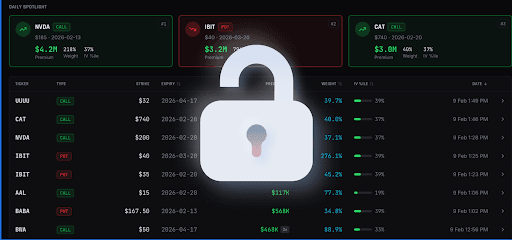
Now I want to hand you the newest trade setups at no cost.
Disclaimer: The profits and performance shown are not based on any sort of typicality for any one individual as there are no live tracked alerts associated with the system. We develop tools and strategies to the best of our ability but no one can guarantee the future. There is always a risk of loss when trading, past performance is not indicative to future results. We make no future earnings claims, and you may lose money. The gains referenced were live options setups based on the Alpha Flow Dashboard signals.