
🚨 I’ll be live at 2:30 p.m. ET with Geof Smith🚨
We’ll cover the overlooked AI bargain, Block’s 4,000 job cuts for an AI Terminator and why Netflix walked away a winner [tap to join us for Profit Panel]
Implied volatility (IV) was dropping throughout the morning Wednesday, and the expected move at the open was just 30 points.
That’s the kind of environment I look for when I put on an iron condor: tight range, muted expectations and conditions that favor premium sellers.
I sold the $6,885/$6,880 SPX put spread and the $6,950/$6,955 call spread. My methodology is simple: I go one strike beyond the expected move to create a higher-probability setup.
The risk-reward profile was $100 max profit per contract with $400 max risk — a 1:4 reward-to-risk ratio. That works well if the market stays inside the range.
The problem was the market moved beyond the expected move.
SPX opened around $6,915 and the expected move projected roughly $6,945. Going one strike out was supposed to give me a buffer, but bullish momentum was stronger than I anticipated.
When a trade like this starts moving against you, there are repair strategies. I could have sold another put spread around $6,938 to collect additional premium — roughly $0.40.
But that would have brought in $40 in credit for about $460 in additional risk. The risk dynamics get ugly fast.
My Profit Panel co-host, Geof Smith, suggested a more flexible structure. He would sell a put spread first and, if price pushed into resistance, then sell the call spread to complete the iron condor. That approach lets price action guide timing instead of forcing both sides at once.
When Iron Condors Work — and When They Don’t
Iron condors work best on tight expected-move days when the market isn’t moving much. When IV contracts during the day, even better — you want option prices declining.
But when unexpected momentum hits — like it did Wednesday after the State of the Union on Tuesday — you’re fighting the tape. The setup was clean, but conditions moved faster than the structure could adapt.
My rule is simple: I don’t add new trades to salvage losing ones. I close it out and move on. No emotion, no digging deeper and no trying to manufacture a win from a broken setup.
Some traders adjust aggressively and that’s fine if it fits their style. It doesn’t fit mine.
The takeaway isn’t that iron condors are flawed. It’s that they require the right environment: Low expected move, contracting IV and a market more likely to chop than trend.
When those conditions line up, they can be a clean, defined-risk way to collect premium. When they don’t, I manage risk and move on.
👉 Click here to join Profit Panel at 2:30 p.m. ET on weekdays!
To better trading,
Alex Reid
WealthPin
Follow along and join the conversation for real-time analysis, trade ideas, market insights and more!
- Telegram: https://t.me/+MKMN30kDmVkwMDdh
- YouTube: http://www.youtube.com/@heywealthpin
Important Note: No one from the WealthPin team will ever contact you directly on Telegram.
*This is for informational and educational purposes only. There is inherent risk in trading, so trade at your own risk.
P.S. 7,000+ Signals From the AlphaOptions Dashboard in Only a Few Days?
Don’t let it scare you.
I want to take you through the entire dashboard and show you exactly what to look for when you deploy this power trading engine.
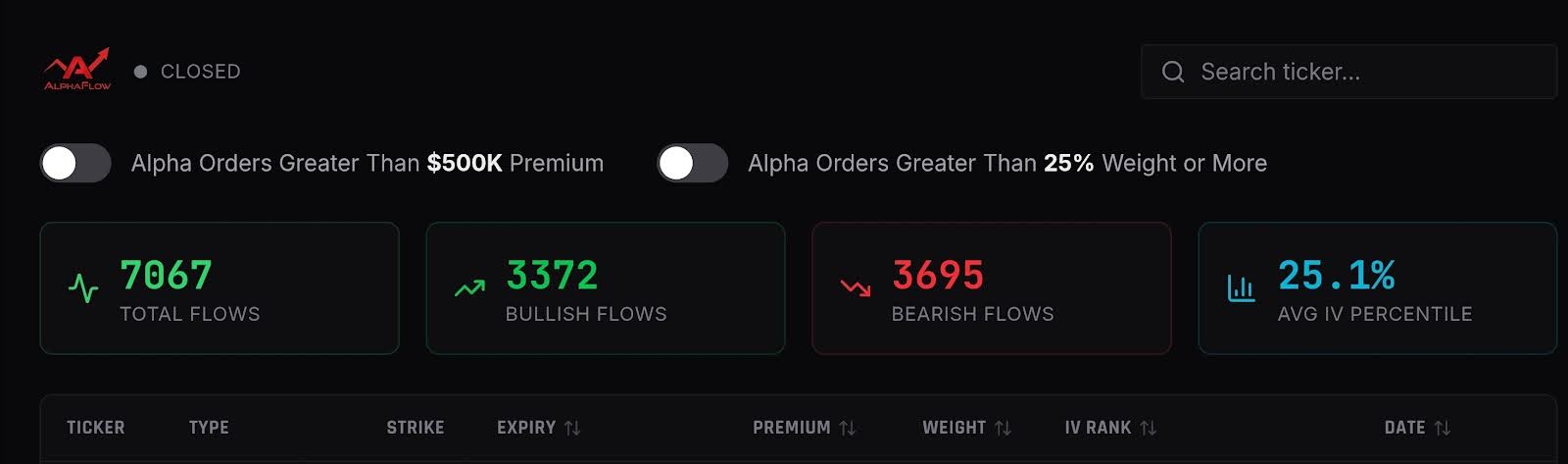
Then I’ll invite you to join the AlphaOptions Experiment — with a chance to secure FREE access for an entire year.
Disclaimer: We develop tools and strategies to the best of our ability, but no one can guarantee the future. There is always a risk of loss when trading past performance is not indicative of future results. The profits and performance shown are not typical and you may lose money. Since this is a tool designed to help traders make informed trading decisions the results will vary for each individual user as there are multiple trades to choose from.