
🚨 I’ll be live at with Geof at 2:30 p.m. ET🚨
We’ll cover whether to buy the dip with bonds up and markets down, the specific flows we’re seeing ahead of NVDA earnings this week, Geof’s take on the latest oil volatility and more [tap to join us for Profit Panel]
I’ll admit it: I used to get sucked into all the doomer content.
The 2001 crash comparisons, the apocalyptic macro threads, the endless predictions about systemic collapse — I read all of it. And honestly, for a while I believed a lot of it too.
The problem is that mindset kept me from making money.
I spent too much time looking for the next catastrophe instead of understanding how markets actually function over long periods of time.
The 1970s stagflation comparisons were a good example of that.
At first glance, they sound convincing. But once you start looking at how different today’s economy is from the one that existed 50 years ago, the analogy becomes a lot less clean.
Back then, manufacturing made up close to 25% of the economy. Today it’s closer to 11%. Union participation is lower, cost-of-living wage adjustments are far less common and the economy is driven much more by services, technology and capital markets.
That doesn’t mean inflation risks don’t exist. It just means blindly replaying the 1970s framework onto today’s market oversimplifies reality.
The Constant Collapse Calls Keep Missing
Earlier this year was another good example.
In March, people were convinced the market had topped. Then tariff headlines hit in April and suddenly every chart online was forecasting collapse again.
A couple months later, markets were printing fresh highs.
That cycle repeats constantly because the doomer mindset is always focused on finding the ending. It rarely spends much time studying the long-term trend itself.
And when you zoom out far enough, most of the scary periods barely register on a long-term chart anyway.
The volatility of 2022, the uncertainty in early 2023 — on a 10-year chart, those periods become relatively small interruptions inside a much larger upward trend.
The Structural Reason Markets Drift Higher
This isn’t really about optimism.
It’s about flows.
There is an enormous amount of capital structurally designed to buy markets over time. Pension funds buy. Retirement accounts buy. Index funds buy.
When a company enters the S&P 500 (SPX), broad passive investment vehicles automatically allocate capital into that company regardless of whether individual investors personally love the valuation or not.
Take Carvana (CVNA) for example.
If CVNA gets added to a major index, retirement accounts and passive index products end up buying shares simply because the structure requires them to.
That’s an important thing a lot of traders overlook.
The market isn’t driven purely by emotion or headlines. Huge portions of it are driven mechanically through ongoing capital allocation systems.
Long-Term Investing and Short-Term Trading Are Different Games
That also doesn’t mean timing suddenly stops mattering.
If you’re trading short-duration options, especially weekly contracts or 0DTE structures, precision still matters a lot. Risk management matters. Position sizing matters.
That’s a completely different game from long-term investing.
Long-term retirement capital benefits from broad market flows and long time horizons. Short-term trading requires discipline and controlled risk because the margin for error is much smaller.
The mistake a lot of people make is mixing those two mindsets together.
How I Think About It Now
I still enjoy reading the dramatic macro collapse stuff sometimes. It’s entertaining.
But I no longer anchor my portfolio decisions around every prediction about the end of the financial system.
Once I stopped constantly fighting market structure and started respecting how capital actually moves through the system, my perspective changed quite a bit.
Markets aren’t perfect. They’re not smooth either.
But over long enough periods of time, there’s a structural reason they tend to drift upward.
Fighting that reality didn’t make me smarter.
Mostly, it just made me miss opportunities.
👉 Click here to join Profit Panel at 2:30 p.m. ET on weekdays!
Profit Panel equips traders to adapt to any market condition, by knowing when to trade aggressively and when to stand aside, live at 2:30 p.m. ET Monday-Friday.
To better trading,
Alex Reid
WealthPin
Follow along and join the conversation for real-time analysis, trade ideas, market insights and more!
- Telegram: https://t.me/+MKMN30kDmVkwMDdh
- YouTube: http://www.youtube.com/@heywealthpin
Important Note: No one from the WealthPin team will ever contact you directly on Telegram.
*This is for informational and educational purposes only. There is inherent risk in trading, so trade at your own risk.
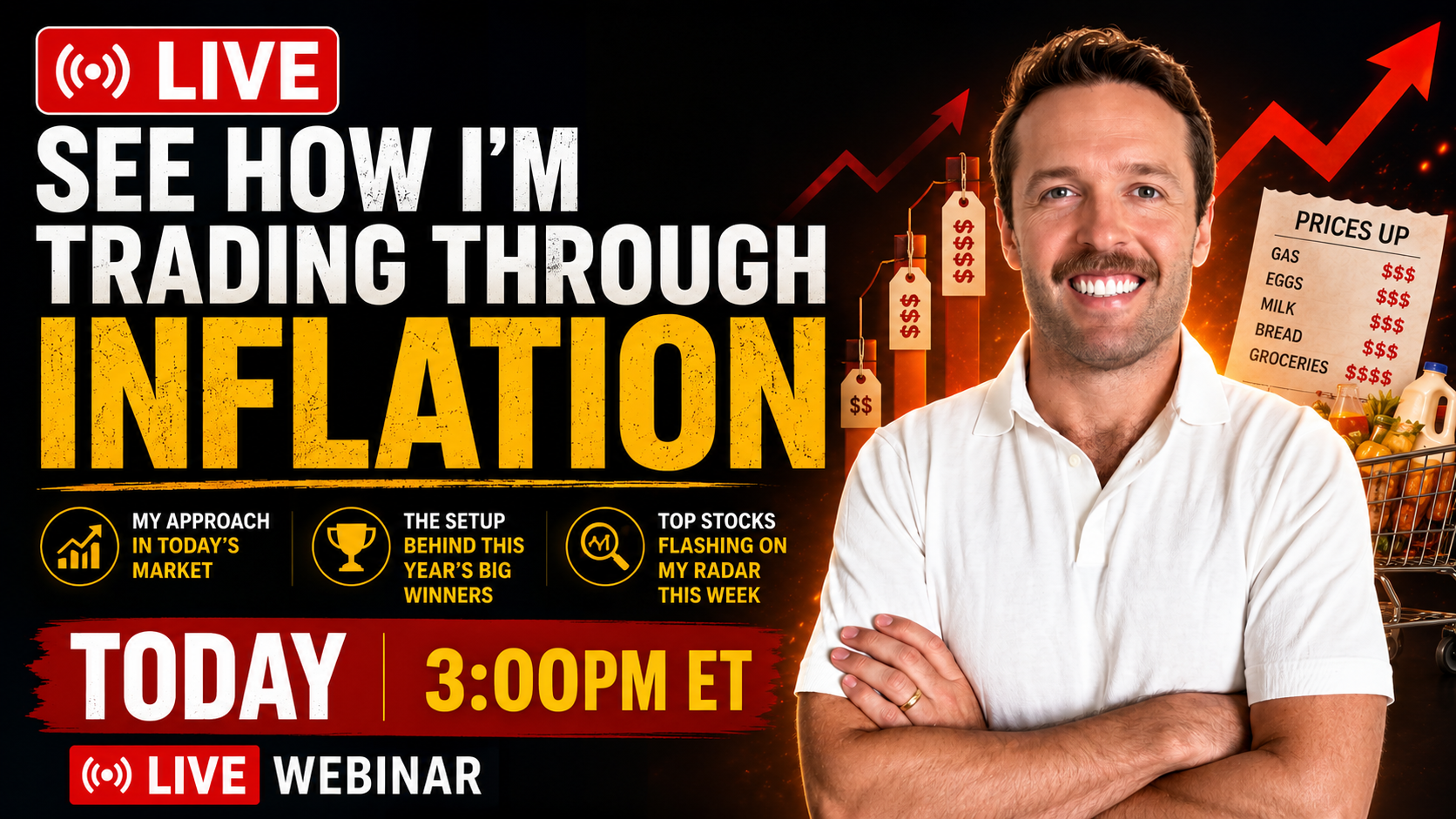
P.S. See How I’m Trading Through the Inflation
Energy prices are climbing. Inflation pressures are heating back up. And traders are starting to realize this market may not stay calm for much longer.
Over the next couple of months, or at least until all these blow over…
I’ll be leaning harder into a specific approach that’s already uncovered multiple major winners this year.
Including an 81% on Huntsman Corp, a 100% on NUAI and even a recent102% on Carnival Corp
Today at 3p.m. ET, I’ll reveal the details live.
Of course there were smaller wins, and even those that didn’t go as planned…
But with inflation and commodity pressure building again, the next wave of opportunities may already be starting to form.
Join me live and I’ll show you:
- How I’m approaching this market environment right now
• The setup behind this year’s biggest winners
• And the top stocks currently flashing on my radar this week
No trading guarantees, of course.
But make sure you’re in the room.
Disclaimer: We develop tools and strategies to the best of our ability but no one can guarantee the future. There is always a risk of loss when trading. From 1/15/25 through 5/18/26 the win rate was 81.6% with a 43% average winner and 16% average net return of winners and losers over a 5 day average hold time.