
We’ll cover a recap of our big weekend swing trades on SLV and QCOM, the market’s push higher following ‘Project Freedom’ news, specific trade setups for NVDA as IV ramps ahead of next week’s earnings and more — Profit Panel starts at 2:30 PM ET
Most traders struggle with one critical question: Where exactly should I take profits?
I’ve been working on a technical analysis approach that helps solve that problem by using volume profile data to identify natural resistance zones that align with calculated profit targets.
The concept centers around what I call volume shelves — price levels where significant trading volume has accumulated, creating predictable support or resistance zones.
When your profit target naturally coincides with a volume shelf, you’ve validated both the target’s realism and identified where to expect selling pressure.
The HUN Setup Structure
Let me walk you through a recent analysis on Huntsman (HUN) that perfectly demonstrates this methodology.
While examining the chart, I identified a critical volume shelf that served a dual purpose — both as a resistance zone and a logical profit target.
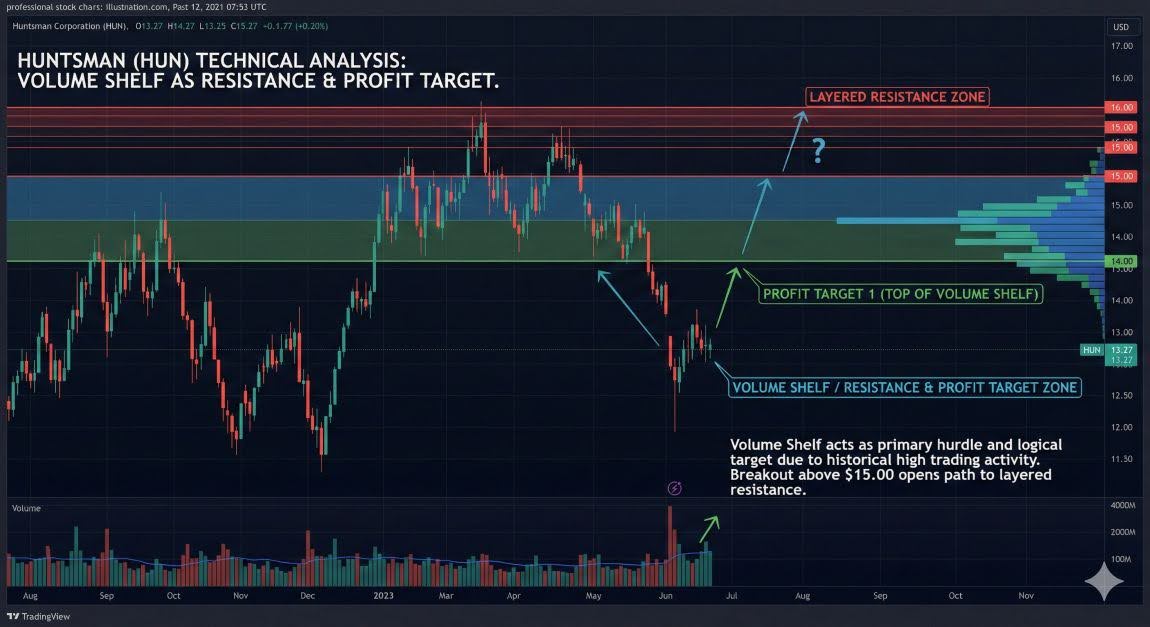
What stood out immediately was that the profit target sat right at the top of the volume shelf. That alignment matters because it confirms the target is realistic and highlights where meaningful resistance is likely to appear.
Even if the stock pushes through the volume shelf, it would likely face resistance at that level. Since that’s where the profit target sits, the trade still works.
The strength of this approach is the layered thinking around resistance. The volume shelf represents the first hurdle. If momentum carries through, there’s room for the stock to run toward the next target.
Risk Management Through Volume Analysis
What makes this methodology powerful is the built-in risk management.
You don’t need perfect execution. Even partial penetration of the volume shelf achieves the objective because that’s where the profit target is set.
That creates a natural buffer — the chart structure does much of the heavy lifting.
The process is straightforward:
- Identify the volume profile
- Locate price levels with heavy historical trading activity
- Mark volume shelves above current price
- Align those levels with profit targets
When those elements line up, you get a trade thesis supported by market structure, not guesswork.
Market conditions matter too.
When capital rotates into safer names or more predictable setups, volume shelves become even more important because they highlight where conviction previously showed up.
👉 Click here to join Profit Panel at 2:30 p.m. ET on weekdays!
To better trading,
Alex Reid
WealthPin
Follow along and join the conversation for real-time analysis, trade ideas, market insights and more!
- Telegram: https://t.me/+MKMN30kDmVkwMDdh
- YouTube: http://www.youtube.com/@heywealthpin
Important Note: No one from the WealthPin team will ever contact you directly on Telegram.
*This is for informational and educational purposes only. There is inherent risk in trading, so trade at your own risk.
P.S. The AlphaFlow Dashboard Has Compiled the Top Options Setups for May
The last time we had setups like these fall right in our lap, we were able to make away with more than 10 winning double, even triple-digit signals.
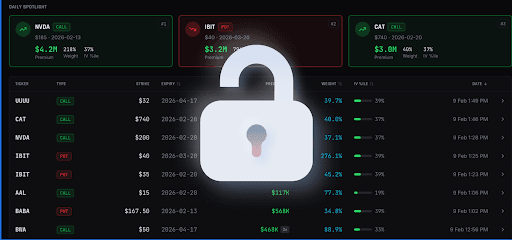
Now I want to hand you the newest trade setups at no cost.
Disclaimer: The profits and performance shown are not based on any sort of typicality for any one individual as there are no live tracked alerts associated with the system. We develop tools and strategies to the best of our ability but no one can guarantee the future. There is always a risk of loss when trading, past performance is not indicative to future results. We make no future earnings claims, and you may lose money. The gains referenced were live options setups based on the Alpha Flow Dashboard signals.