
Why Nvidia Without Jensen Changes Everything

🚨 Profit Panel is live at 9:30 a.m. ET🚨
[tap to join us for Profit Panel]
Jensen Huang, Taiwanese-American CEO of Nvidia, built Nvidia (NVDA).
He wasn’t just the CEO — he was the vision, the product roadmap and the engineering edge that kept the company miles ahead of the pack.
Now that he’s been pushed out following the board’s swift intervention over executive conduct, the reality is stark: Jensen was NVDA.
The doubt isn’t about next quarter. It’s about whether the engineering breakthroughs that defined this company can continue without the person who drove them.
If you’re thinking this is business as usual, you’re not seeing the full picture.
What I’m Doing Right Now
My position is straightforward: I remain short NVDA right now. Rather than a clean pump, the chart is seeing heavy institutional distribution and sharp volatility as major holders reassess the post-Jensen landscape.
NVDA reports earnings on Tuesday, and I’m sure the headline numbers will look solid — they have been.
But it’s not the report I’m worried about. It’s the quarters that follow.
The last two years have been driven by one narrative: AI capex and NVDA’s undisputed hardware monopoly.
That momentum doesn’t vanish overnight, but it erodes fast when the architect who built the machine is no longer steering it.
The Bigger Risk Nobody’s Pricing In
There’s another layer getting overlooked. The Department of Justice already has active antitrust probes and chip-diversion inquiries underway.
The real risk isn’t whether regulators will look — they’re already digging deep. It’s how aggressively Washington moves to challenge NVDA’s structural dominance.
Who benefits? Competitors do.
Companies like Broadcom (AVGO) are already moving higher as capital rotates toward alternative custom silicon architectures and diversified AI plays.
Meanwhile, with Anthropic’s IPO approaching, the shifting ecosystem alters how frontier AI labs source and secure compute.
There’s one wildcard worth pricing in: Jensen still holds a massive stake — roughly $140 billion in stock (approximately 3.58% of the company).
While he lacks super-voting shares and institutional giants like Vanguard and BlackRock hold larger blocks to easily block a hostile board takeover, having that much financial skin in the game means his next moves will cast a long, unpredictable shadow over the stock.
The edge that made NVDA dominant came from Jensen. Whether it left with him is the question the market is only beginning to price in.
To better trading,
Alex Reid
WealthPin
Follow along and join the conversation for real-time analysis, trade ideas, market insights and more!
- Telegram: https://t.me/+MKMN30kDmVkwMDdh
- YouTube: http://www.youtube.com/@heywealthpin
Important Note: No one from the WealthPin team will ever contact you directly on Telegram.
*This is for informational and educational purposes only. There is inherent risk in trading, so trade at your own risk.
P.S. Stop Trying to Predict When and How Far Stocks Move
Most traders bleed capital because traditional options force them to guess both the exact timing and the size of the price move.
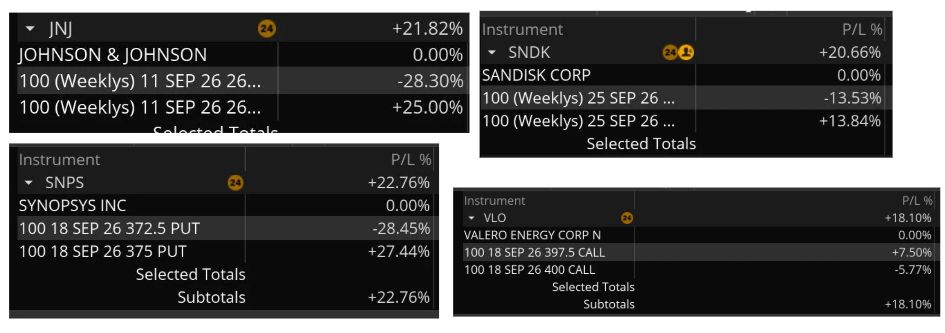
This new approach targets rapid double-digit payouts without requiring you to forecast market direction or stock jumps.
Click here to discover how this new setup
Disclaimer: We develop tools and strategies to the best of our ability but no one can guarantee the future. There is always a risk of loss when trading. According to our historical backtest of nine months of data and over 100 trades from January 1, 2026, through November 9, 2026, the win rate was 84.6%, with a 20.54%average winner and 8.34% average net return of winners and losers over a 1-day average hold time. In the LIVE Beta Test from September 9th, 2026, we had a 100% success rate on four trades with an average return of 15.25% over a 1-day average hold time.