
Why I Check My Screen Twice When Defensive Plays Fail

🚨 Profit Panel is live at 9:30 a.m. ET🚨
[tap to join us for Profit Panel]
Thursday morning delivered one of those market setups that makes you check your screens twice.
At the open, renewables were down, semiconductors and industrials were mixed and biotech was selling off after a huge run-up.
The mRNA names were moving lower too. Oil was up, which made sense given the headline flow. But then the picture got strange.
I started looking for where the traditional safe-haven money was hiding. Retail stocks were down. Fine. But then I pulled up the defensive sectors — the places investors are supposed to rotate into when conditions get choppy.
Safety was down. Not flat. Down.
The Real Surprise Was in the Banks
I expected banks to carry some weight Thursday morning.
With interest rates elevated, you would normally expect the sector to attract interest because higher rates can support lending margins. Instead, the banks did not perform well at all. In fact, they just didn’t do anything.
So if the defensive plays weren’t working and the rotation trade wasn’t showing up in banks, where was the actual strength?
Crypto was really the only thing up on the day.
Not a little up — it was the lone standout. There also appeared to be a political catalyst behind the move, with President Donald Trump pushing for the CLARITY Act and renewed attention on a clearer regulatory framework for digital assets.
That gave traders a reason to concentrate their bets in crypto beyond simple market speculation.
The S&P 500 (SPY) gapped down at the open, and the volatility was hard to miss. Then volatility began compressing and SPY started climbing.
I checked the mega-cap names to see what was doing the lifting. They were slightly green, but nothing dramatic.
What This Tells Us About the Tape
When you see a gap down followed by compression and a grind higher, but the usual suspects aren’t leading, that’s information.
It was shaping up as an inside day — meaning SPY remained within the prior session’s range despite the overnight move.
The size and speed of the swings also made SPY’s next direction difficult to predict. High volatility can produce sharp moves that look convincing before reversing, so the first bounce isn’t automatically a reliable signal.
Inside days after volatility spikes can set up continuation or reversal, but they need a catalyst. Without clear sector leadership and with only crypto showing real conviction, the message was simple: Wait for proof.
This is why I don’t chase the first bounce. When the playbook doesn’t match the price action, I stay patient and let the close sort it out. If leadership emerges and holds into the next session, that’s when the better setups appear.
Until then, I’m watching where the money actually goes, not where the headlines say it should.
To better trading,
Alex Reid
WealthPin
Follow along and join the conversation for real-time analysis, trade ideas, market insights and more!
- Telegram: https://t.me/+MKMN30kDmVkwMDdh
- YouTube: http://www.youtube.com/@heywealthpin
Important Note: No one from the WealthPin team will ever contact you directly on Telegram.
*This is for informational and educational purposes only. There is inherent risk in trading, so trade at your own risk.
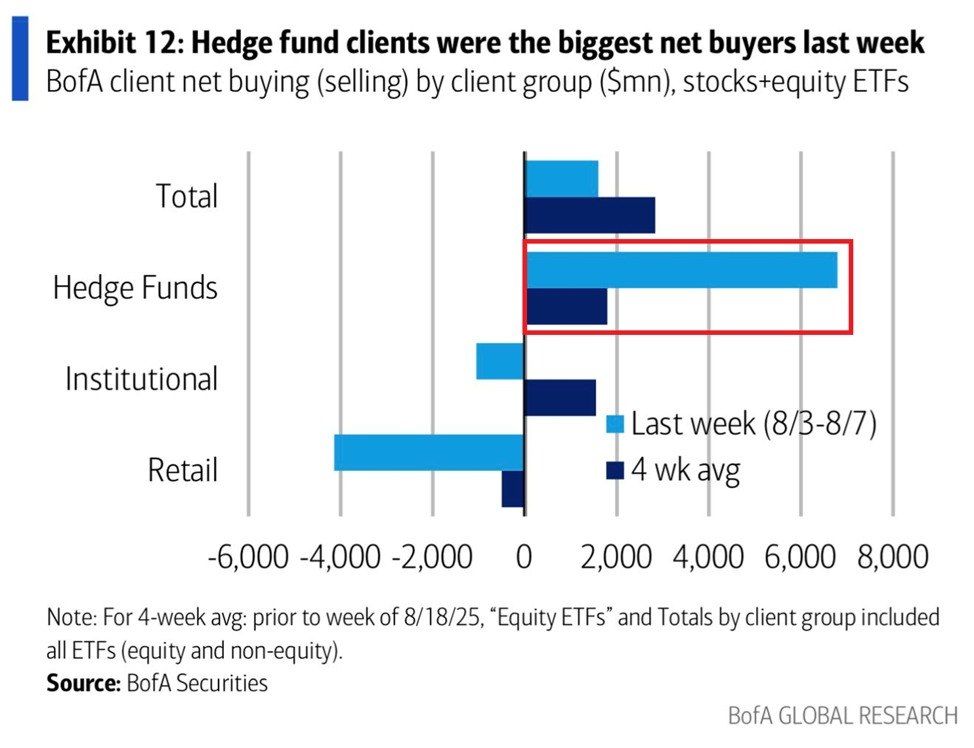
P.S. Hedge Funds Just Made Their Biggest Weekly Buy In 18 Years
See how to track these rotations as they happen in real time
Disclaimer: We develop tools and strategies to the best of our ability, but no one can guarantee the future. Trading always carries a risk of loss. Past Performance is not indicative of future results. What you will see today are some of the best examples from the public trade research service that utilizes this underlying method. From 1/15/25 through 8/17/26, the win rate was 83.1%, with a 39.71% average winner and a 19.52% average net return of winners and losers over a 5-day average hold time.