
1 Biotech Refuses to Fall — While Novo and mRNA Names Crack

🚨 Profit Panel is live at 9:30 a.m. ET🚨
[tap to join us for Profit Panel]
Sometimes the most interesting signal in a sector isn’t what’s rallying — it’s what’s not falling.
I’ve been digging through biopharma names, and there’s a split that caught my attention. Eli Lilly (LLY) is holding up while other major drugmakers, including Novo Nordisk (NVO), and mRNA-related stocks face selling pressure.
That kind of divergence usually means something.
Lilly and Novo are direct competitors in the GLP-1 weight-loss drug market, one of the industry’s hottest themes. When one holds and the other doesn’t, it’s worth asking whether the gap reflects company-specific news, stronger fundamentals or institutions choosing a clear favorite.
What Divergence Tells Us
I analyze divergence in three steps.
First, I assess the broader market and sector trend. Next, I compare direct competitors to see whether the strength is isolated. Finally, I look for confirmation through price levels, volume and follow-through.
This framework works beyond biopharma. Nokia (NOK), for example, can attract interest through its exposure to telecommunications, photonics and semiconductor-related infrastructure.
When a traditional name catches an unexpected bid, the label matters less than the market’s behavior. The same question applies: Why is money moving there while comparable stocks lag?
Broader forces matter too. Interest rates, economic expectations and institutional positioning can reshape risk appetite across sectors.
High-profile investors such as Michael Burry can also draw attention to themes already developing beneath the surface.
Their positioning isn’t a reason to copy a trade, but it can help identify where sophisticated investors see risk or opportunity.
How I Use This Setup
I don’t chase divergence on day one. I watch whether it holds.
If Lilly keeps defending its levels while peers remain weak, that suggests the market is making a deliberate choice rather than producing a one-session anomaly.
From there, I monitor the 20-day and 50-day moving averages, trading volume and daily closes. If Lilly holds above those checkpoints with continued relative strength, I’d consider a small starter position or a defined-risk call spread.
If sector-wide selling intensifies and Lilly rolls over, the divergence has failed — and that’s a reason to stay patient.
The goal today isn’t to force a trade. It’s to notice what the market is revealing, compare that behavior across sectors and wait for confirmation.
To better trading,
Alex Reid
WealthPin
Follow along and join the conversation for real-time analysis, trade ideas, market insights and more!
- Telegram: https://t.me/+MKMN30kDmVkwMDdh
- YouTube: http://www.youtube.com/@heywealthpin
Important Note: No one from the WealthPin team will ever contact you directly on Telegram.
*This is for informational and educational purposes only. There is inherent risk in trading, so trade at your own risk.
P.S. REVEALED: The source of Q4’s most lucrative trade opportunities
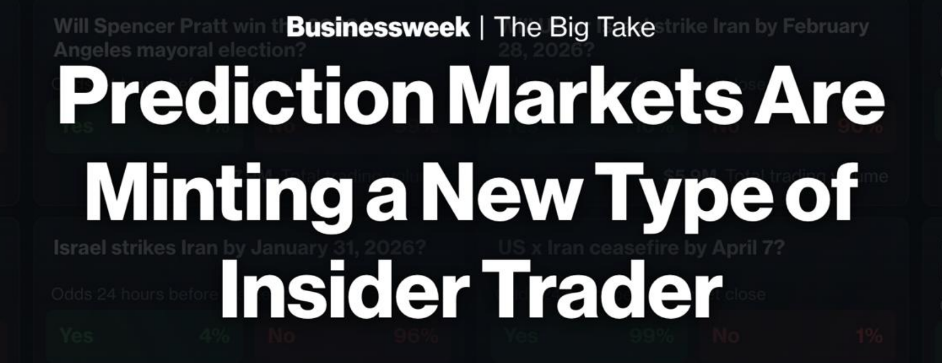
I’ve been tracking an entirely different kind of insider activity that doesn’t take place on the stock, options, or even crypto market.
Yet it’s become a safe haven forward the biggest insiders and is primed to produce the biggest trading opportunities of the next 10 weeks.
Disclaimer: We develop tools and strategies to the best of our ability but no one can guarantee the future. There is always a risk of loss when trading. Past Performance is not indicative of future results. What you will see today are some of the best examples from the public trades that utilizes the Oracle trading tool. From 5/26 through 8/26 the win rate was 85.4% with a 42% average winner and 28% average net return of winners and losers over a 3 day average hold time. Since this is a tool for traders and not a trading service, profits and performance will vary among users.